I shouldn't have to come up with a title everytime I want to post something - so this one contains only today's date. And this is a multi-topic post anyhow.
First, there is this fantastic interview with everyone's favorite right-wing zealot, Ann Coulter:
http://www.jambands.com/Features/content_2006_06_23.06.phtml
You will note in the interview the lament that the Dead never played "Pride of Cucamonga", as well as listing it as one of her favorite songs. If this doesn't absolutely prove, beyond a shadow of a doubt, her utter wisdom then nothing does.
Secondly, but along similar psychedelic lines, Andrew looked thoughtfully at Mommy while at the store today and made the uncanny proclamation that he "really likes gravity". Elaina immediately chimed in with a chorus of "I wike it; I wike gwavity too!!" An appreciation for celestial cohesion is something we as parents have tried hard to imbue within our children, and our efforts are clearly paying off. We can only hope that they grow to have a similar enthusiasm and fondness for inertia, conservation of energy, and everyone's favorite: entropy.
And so now it is time to "close the loop": Andrew, in addition to being a fan of the Beetles quirkier and more psychedelic efforts, he has now taken to dancing to "Mexicali Blues" and various live renditions of "The Promised Land". I wonder if he likes them as much as gravity itself?
Wednesday, February 28, 2007


Monday, February 26, 2007
Kafka on the Shore
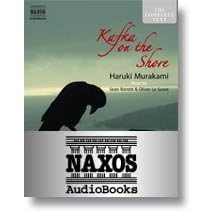 You should all read this. Better yet, listen to the audio book, because the two guys who do the narration are fantastic actors and they really add depth and consistency to the characters. Here is why you, faithful blog reader, should read Kafka on the Shore:
1) It's better than Atlas Shrugged.
2) It's not Atlas Shrugged.
3) It wasn't written by Ayn Rand.
4) It takes place in modern-day (as in 2006) Japan and is written by a Japanese author. Admit it - you hardly read anything translated from Japanese now a days. Oh, that reminds me. Go here: http://www.engrish.com
5) Because it takes place in Japan, miso and sushi are ubiquitous. While not as good as actually consuming miso and/or sushi, its nice to imagine yourself in japan doing just that.
6) It's a "fantasy" type book, but only marginally. Kind of like a Stephen King novel; but having to do with identity and destiny and not so much horror or the supernatural. It's hard to say why a semi-fantasy book is a "reason" to read the book, but it is.
7) As I mentioned above, the narrators are really fantastic.
8) One of the main characters is very Forest Gump-ish. "Not too bright" as he refers to himself; but purely moral and benevolent.
9) It deals with lofty, romantic notions; philosophy, and even offers some allusions and nods to literature and music. It touches all of these areas without pretense or condescension. In fact, come to think of it, the author seems almost unaware that he even does this, making these themes all the more genuine and accessible.
10) It's amazing to see how the Japanese live these days. Amazing because it sounds so "American". There are all kinds of references made (without any derision, I might add) toward American pop-culture and European "classical" (for lack of a better word) culture.
I am sure there are other good reasons to read/listen to the book. But the best reason is that I asked you to.
Friday, February 23, 2007
No bias here...
This was the lead story tonight as I log onto my email:

The AP has apparently moved up its "Free Campaigning for Democrats" program several months in advance of the 2008 elections in comparison to years prior.
Was what Cheney said worthy of ridicule? Obviously. But Obama is not the only one making such criticisms. BUT - he is apparently the AP favorite for the primaries, and so we see this lovely photo of him and his oh-so-insightful commentary as the leading news story. So - we have heard the call: vote Obama for Democratic Presidential Nomination! And since the call came in the form of a news story (OK, many news stories, this one is hardly unique), we get to pretend like it was our own idea!
Thursday, February 15, 2007
Andrew's favorite holidays
A few minutes ago Andrew declared to his Mommy that he has five favorite holidays. Here is the list, as provided by Andrew:
1. Christmas
2. Valentines Day
3. Halloween
4. Valentines Day
5. Groundhogs Day - Because they have peanut butter cookies at school.
I don't think he really put a lot of thought into this list, but its kind of funny. At least in my opinion.
You know what else is funny? Mary L. Baldwin, an employee at the Fund was married and her new name is Mary L. Lamb. No, the L does not stand for Little. But Lea. Pretty close. I found it rather amusing. No one else did. And no one but Tina and I are likely to find Andrew's unsolicited list funny either. But that's OK. It's my dumb blog and I will fill it with any manner of inanity I deem suitable.
Saturday, February 10, 2007
Orange County Public Library
We have the best Library system here in Orange County. I say this beacause they ship books to you for free! How great is that? You just go online to their site, find the book you want and specify how long you're willing to wait for it, and it arrives at your door, usually in a few days :-) And what's neat is that you can choose any book from any branch and return it to whatever branch is closest to you. And they have a drive through, after-hours drop off slot as well.
Maybe its a bit silly for a grown-man to be so excited by a library, but I have been able to "read" so many more books because of it. I think I will try to comment on all of them at some point, but here is the list since August - note they are all audio books:
1) Confessions of an Economic Hitman - John Perkins
2) Frankenstein - Mary Shelly
3) Hitchhikers Guide to the Galaxy - Douglas Adams
4) Whale Season - N.M. Kelby
5) Atlas Shrugged - Ayn Rand
6) JPod - Douglas Coupland
7) Going Postal - Terry Pratchett
8) Kafka on the Shore - Haruki Murakama
9) Terrorist - John Updike
I am not yet done with numbers eight and nine, but I can say already that all of these books are are excellent, and Frankenstein is just amazing - probably a classic among classics. My praise for all of these books does not extend to Rand's work, as you might have guessed.
I do have a point to all of this: each of you should go to your local library's website and see what services they offer - they too might offer home delivery. And even if they don't, who cares? I stopped using it after Hitchhiker anyway, and am glad I did. All of the books after that one were picked up by just browsing, and I am really glad to have done so. Surely no online search would have yielded Murakama or Pratchett - two authors whose works I intend to delve into more deeply.
How about all two or three of you out there? Any recommendations. Yes, Dan - they have Hemingway in audio book: but you have to finish "Unveiled" first.
Confessions of a styrafoam safe-T helmeted Hitman
Upon the encouragement of a friend, I am posting a blog entry. Well, why not. After all, I need a little break. I'm reading "Learn ASP.net 2.0 in 24 hours" by SAMS. It consists of twenty-four hour-long lessons. I am nearing the conclusion of hour four, and have just built a mortgage calculator. Nothing fancy or complicated, and the book walks you through making it while explaining most of what goes into it.
Anyhow, speaking of books - I am very much into Audio books lately. I listened to my first this past August: "Confessions of an Economic Hitman" by Edward McWackenjob (or something like that). It was actually a fairly interesting book; which surprised me since it came upon the recommendation (insistence, really) of my friend Dan. He was supposed to read "Islam Unveiled" in exchange for subjecting me to the made-up-world of John Perkins ('Confessions' actual author), but he never completely read it. I could speculate for a while as to why he chose to go against his promise to me to complete the book, but I think the most likely reason of all was that his brain was two sizes too small (got to start reading the kids less Seuss). Well, if I am going to bring up Confessions, I may as well critique it a bit:
John Perkins was an engineer who worked for a big evil corporation. An electrical engineer, and not too-talented by his own description. His job was to jet around the world to forecast load requirements on the electrical grids his company was about to burden the host nation with. He was encouraged to inflate the numbers so that the evil corporation could build the biggest possible grids (we need to that here in the States!!!) and thereby maximize their evil profits, earned evilly and to be used toward all sorts of evil purposes; most notably the Guild of Evil Evil-Doers, the Rotary Club, Girl Scouts, Bechtel, Halliburton, Halliburton, Halliburton, etc. So this is why the book is entitled "Confessions"... because he would dupe all of those dumb world leaders into buying more electrical capacity than they really needed. In some countries, he even tricked them into getting the undercoating and over-charged for the scotch-guard too. And just where did these benevolent, if naive, Third-World leaders get the scratch to build such a fancy-schmancy electrification system? The US: by way of the World Bank and the IMF.
Perkin's assertion is that the US grants loans to third world countries so that it can call in favors from these countries when the US wants to flex its Empirical muscle. The US also insists that the country uses US firms to complete the work (no way, really???!!!). This brazen selfishness of lending money with a few strings attached is of course why 9/11 happened, according to the author. You see, in his mind the world is just so tired of the US bullying small helpless countries, that it was only inevitable that we would be attacked in the name of Allah. Now, the ignorant among us might perceive a slight disconnect between Islamic Terrorism and how the World Bank and IMF loans money to impoverished nations. If you are one of these people, you might just be lacking the colorful imagination required to fully grasp the nuances here.
Huh... this blogging stuff really is cathartic...
In all fairness to Perkins, he brings up VERY important points:
1) Politicians, using our tax dollars, loan money to countries and then that money immediately gets used by huge corporations. In turn, these corporations make big donations to campaign coffers, and surely influence legislation that directly affects their own business.
2) Even though we ARE helping the third world, they often don't appreciate this. I mean, Perkins himself didn't even see the value in what he was doing. He spoke about how he arrived in country and saw men using a small river as their "bathroom", while another person bathed in it down stream a bit, and yet another drank from it. First of all... like many parts of this novel, Perkin's experiences are too obviously allegory or metaphor to be taken seriously as actual experiences. Anyhow, what do you suppose his thoughts were upon seeing the river being used in such a way? He felt pity for the people having to use a single body water as bathroom/shower/tap, but he thought about how he was being so evil by "exploiting" them by burdening them with the loans... which would be used to do such awful things such as provide indoor plumbing, electricity, jobs... oh, the humanity of it all!! OK, I digress. The point is that there are many out there who think in Perkins stupid fashion. So why should we, the taxpayers, foot the bill?
3) We use our power for the sake of "Global Empire", is Perkin's assertion. But I can't say that he is wrong about this. I for one believe we need to be much more isolationist, at least from a political-perspective, than we have been.
In conclusion, I actually do recommend the book. Too often in this day and age we are not subjected to how other people think, despite or perhaps because of the fact that we have so many more choices in media, we end up consuming only that which affirms our already-established beliefs. Perkin's did open up my eyes to the need for democracies such as ours to be better stewards of where our money goes. And just how much we are dumping into endeavors that just have no place being funded by a government. But unfortunately, too many people - from the left and the right - don't understand that government needs to be extremely limited and controlled. It's just not in the zeitgeist of modern thinking like it once was.
Well, enough of that. There, I posted. Are you all happy now?...
(crickets chirping)
Monday, January 15, 2007
Netsh diag gui
Click Start, Run, type in Netsh diag gui and press enter. Run the system scan. Pretty neat, huh? You can get some of this information in other ways, but I can't think of an alternative that is this comprehensive and well-ordered.
You know what else is neat? If you save the results you'll get an HTML doc on your desktop. When run in your browser, you can click the + and - signs and still get the same information - handy if you need to share the system scan results with a tech.
But what I really liked about it was found in the source code of the saved file. Probably because I am relatively new to HTML and javascript, I am impressed at how the collection and formatting of the data is handled by a minimum amount of well-explained javascript and a style sheet. It amounts to 150 lines of initial code (much of it comments and brackets) to generate about 300 lines of html.
Perhaps this code could be useful in displaying any kind of hierarchical data, so it's kind of re-usable. If I were to change one thing though, it would be the use of ascii + and -. I would try to use a little gray and black gif, or maybe even better would be just clicking on the parent to expand/collapse the tree.
Friday, December 22, 2006
Fun with handling.cfg
Playing Vice City. I tried to make it more like the cheetah, only with a few "improvements" in the suspension. My tweaks have rendered the ambulance into into a hydraulic weeble wobble. It's not the Cheetah-with-a-heart that I was aiming for.
 I managed to get the ambulance near the hotel at the beach but I accidentally slammed it into a palm tree, sending it into the air, spinning into space. And when it landed, the game crashed. Something to do with the float percentage =0. I guess that doesn't turn it into a magical ambulance/boat hybrid. I could save drowning people with it, you know. It did make for a nice stunt bonus.
 I managed to get the ambulance near the hotel at the beach but I accidentally slammed it into a palm tree, sending it into the air, spinning into space. And when it landed, the game crashed. Something to do with the float percentage =0. I guess that doesn't turn it into a magical ambulance/boat hybrid. I could save drowning people with it, you know. It did make for a nice stunt bonus.

Rotation: 2329 degrees.
Net rotation: 169 degrees.
Dizzy?: Very
Insane Stunt Bonus?: Yes
Saved?: No, the game crashed when it hit the water.
Lesson Learned?: No.
All copyrights, trademarks, images, copyrights property of Rockstar games and Rockstar North?: Yes
Saturday, December 09, 2006
Wednesday, December 06, 2006
Atlas Shrugged...
... In what was probably an attempt to rid the world of Ayn Rand, I suspect. I couldn't complete even the first third of this painfully obvious and obscenely arrogant novel two years ago when I first endeavored it. But I saw it on the shelf last week at the local library in audio-book form. This version was also abridged, so I went ahead and picked it up.
The abridged version is a bit of a blessing and a curse. It is a blessing because the reader is not subjected to Rand's attempts at erotica and romance with her automaton heroin, Miss Dagny Taggart. However, the reading of the abridged version comes at the price of not fully understanding which character is which and who does what. But this disadvantage is offset in its severity by the fact that it doesn't matter what the characters are doing because they are all the same. Actually they are one of two: either a leech or an industrialist. The upshot of the book is that the industrialists fight a world besieged by Marxist ideology and philosophy. The leeches (or looters as she calls them) foster the adoption of Marxism and carry out its practical implementation. The industrialists, one by one, tire of being victimized by the leeches and decide to "shrug". By "shrug", Rand means they simply don't engage in commerce any longer. Because these 20+ American industrialists decide to disengage themselves and horde their talent, the economy crumbles.
As a believer in the virtue of capitalism, I agree with at least some of the basic premises the book subscribes: individualism, money as a source of good and not evil, Marxism being liberty's antidote. But my God, the way Rand goes about telling it in this fictionalized waste of 900+ pages... Maybe her ideas were radical in 1957, but in 2006, all but the most leftist Marxist would disagree with 80% of her founding sentiments.
I won't go into the details just what annoys me about this book, but if anyone has read or reads it, share your thoughts, please. Did any of those of you who read it find Dagny to be a complete moron for not figuring out what was going on in the world well before her plane crash? Oh, for those who didn't read it: yes, the railroad Heiress apparently knows how to pilot planes. We don't learn this until she's actually ready to take off. Because like most of us, knowing how to pilot small aircraft is incidental and not really worth mentioning. Did anyone else find it absurd that the world would just cease to function without a handful of talented and industrious people? I am surely not being overly-optimistic when I say that there would be scores of people to take their places - people who step up to the plate, rise to the challenge, and spout off cliche after cliche.
Oddly enough, as much as I hate the condescending tone of Rand, I wouldn't dissuade anyone from reading it. After all, it is the fictionalized explanation for her philosophy: objectivism. Which is a pretty cool philosophy, as far as philosophies go.
Some updates
Dear members of this blog's vast readership,
Please accept my long overdue updates. I am hoping to update our picture website as well. I was going through some of the available photos last night and found some good ones. Anyhow, I haven't been updating the blog, and I think its because of the expectations I've placed on myself as to the quality of each entry. Sometimes I'm just not in the mood to consider subjects of religion, philosophy, personal finance, or fruit-based conspiracies. I think part of the problem with this blog is the dramatic headers, bold colors, and tight paragraphs. There is an implicit importance to whatever is written - an implication not warranted or desired. It needs to look sloppier, so as to match the sloppy nature of the blog and blogger, and perhaps, the blogee (you).
So, here are the updates. The newdle is progressing rapidly. Did you know it is already 10 inches long? And it won't even be here until the end of April. Andrew seems to be looking forward to Its arrival. Elaina seems to understand and accept it. However, the other day Andrew was on Tina's lap, cuddling up with her. Well, this angered little 'Nina Banina' (one of her nick-names) and she expressed it by pulling on Andrew's leg, trying to get him off, all the while saying loudly "Andoo not baby, I baby!!" This doesn't bode well for the newdle.
Wednesday, November 01, 2006
Red Delicious apples
Red Delicious apples... This is a misnomer. Red? Yes. Delicious? Certainly not. The name is deliberately deceptive. The first word gains your trust in the description of this apple. Anyone can clearly see the apple is red. So its only natural to assume that it must be as delicious as it is red. But the second word is a lie. Which means that this name was given, not by a Red Delicious apple grower seeking to increase his fortunes, but by a rival fruit. A entirely different class of fruit, not another variety of apple. This was done to draw attention away from apples altogether by the novice fruit-eater so that the offending fruit could increase his chances of being eaten. But why does it choose to be eaten? It must be a depressed, self-loathing fruit. A fruit who would wantonly trick the fruit neophyte into believing that if the Red Delicious is delicious by apple standards, then the Gala, McIntosh, Fiji, et al., must all be even less delicious. And its golden cousin, the Golden Delicious? Well, it certainly pleases the palate far better than that mealy Red husk of a fruit. But its not the gold standard (pun not intended) of apple colors.
Did you know that the Red Delicious amongst worm circles are actually known as "The Red Death" because so many troupes of worms have died due to malnutrition on a diet of aesthetically pleasing but entirely grotesque Red Delicious apple tree orchards? We need to stop the starvation of fruit worms, and return the hopes and dreams of fruit novices everywhere. We must rename the Red Delicious to something else. But what? Red Fiber Fruits. Red Crunchies - Sugar Free. Apple Yawns. Non-specific Tasteless Fruit. These are my ideas. I ask for yours.
Did you know that the Red Delicious amongst worm circles are actually known as "The Red Death" because so many troupes of worms have died due to malnutrition on a diet of aesthetically pleasing but entirely grotesque Red Delicious apple tree orchards? We need to stop the starvation of fruit worms, and return the hopes and dreams of fruit novices everywhere. We must rename the Red Delicious to something else. But what? Red Fiber Fruits. Red Crunchies - Sugar Free. Apple Yawns. Non-specific Tasteless Fruit. These are my ideas. I ask for yours.
Why a Roth?
I was looking into retirement savings options and a colleague suggested a Roth IRA. So I looked into it and found that it uses post-tax dollars instead of pre-tax. Why in the world would you want this? I see two obvious problems with this approach:
1) It assumes you will be in a higher tax bracket at the time of retirement than now. I assume this is possible, but I would think that for most people this would not be the case. After all, you're not actually working at this time in your life. That's why its called retirement. Not something else. Something that might suggest rolling in the dough. Like working. Although, I do that now and I am hardly rolling in any such dough.
2) Using post-tax dollars gives you less total capital to invest. It goes against the principals of maximizing earnings and profits using dollar-cost-averaging. Furthermore, it defies the ultimate rule of all investing: more is better. More, more, more, more!!!!
But once again, I call upon you, oh faithful blog readers (aka, Tina, Steve, and Jimmy) to fill me in on why someone might want to go with a Roth over a traditional IRA. I know this very question has been burning within each of you for as long as you can remember.
Monday, October 16, 2006
The Newdle
For those who don't already know, Tina and I are expecting our latest and final addition to the Sullivan roster in early May. For now, we call it "The Newdle" - as in noodle but "new". We needed to give it a nickname and this seemed like as good a nickname as any for a fetus. We won't be finding out the sex ahead of time, but we think it will be a boy. Tina and I can't agree on a boy name - she likes nouveau names and I like more traditional names. If anyone has any suggestions, please make them. I will likely hate whatever you have to offer, but Tina might like it. Hey, I am just being honest...
Andrew's Birthday
Today was Andrew Carr Sullivan's 4th birthday. We celebrated in the most authentically American way possible: stuffing ourselves at Disney World. At the (not-so)Contemporary Hotel they have something called a "Character Breakfast" - an all-you-care-to-eat buffet with some pretty decent food and Disney characters walking around and interacting with the kids and even the adults. Its quite a bit of fun, actually, and Andrew was really excited to see Mickey, Pluto, and Goofey most of all. Chip stopped by and offered a fuzzy hand. I told Andrew that this fuzziness was noteworthy - not because it actually was, but because I had nothing else to offer. Chip left, and some time later Dale came by. I realized just how easily the two characters could be confused, so I assured Andrew that when dealing with Dale, what is most important is to not confuse her with Chip. It was at this moment that I was able to penetrate the costume to the character actor beneath - we understood each other for that moment and shared a very special bond: a bond forged in the human-to-human ether wafting through Dale's poorly ventilated costume. Andrew could sense the very real Disney magic taking place at that very moment, and let us know it by saying what was on everybody's mind: "I want more waffles".
We did more things today to celebrate Andrew's fourth birthday. Technically his fifth, but you know what I mean. He got a 16" bike, floam, moon sand, many things super-hero related, and of course clothing that he really could care any less about if he tried. He also got to ride the monorail at Disney, go to school (which doesn't sound great, but trust me, he loves it), and go to his grandparents house. Overall he had a lot of fun and was in a wonderful mood all day.
We did more things today to celebrate Andrew's fourth birthday. Technically his fifth, but you know what I mean. He got a 16" bike, floam, moon sand, many things super-hero related, and of course clothing that he really could care any less about if he tried. He also got to ride the monorail at Disney, go to school (which doesn't sound great, but trust me, he loves it), and go to his grandparents house. Overall he had a lot of fun and was in a wonderful mood all day.
Wednesday, October 11, 2006
Prisoners' Dilemma and Foreign Policy
I am very slowly getting through a book entitled "The Selfish Gene" by Richard Dawkins. It's been a labor endeavored on and off for the last decade, as has Immanual Kant's "Metaphysics of Morals". But oddly, through these two books, I am finding some clarity to the question of Pre-emption, the Bush Doctrine, and Foreign Policy in general.
Dawkins goes into the Prisoners' Dilemma as a vehicle for exploring altruism, cooperation, and competition among individual members of a given species. For those unfamiliar with Prisoners' Dilemma, please read some of this to become acquainted. The prisoners' dilemma also seems to port well to our own national security and how we ought to handle other emerging threats.
What we find with the PD "game" is that the best strategy is what's known as "Tit for Tat with some forgiveness". To summarize, the best strategy is the assumption of cooperation on the part of your "opponent". If that opponent takes advantage of your altruism, you immediately strike back, just once, and immediately forget the incident. To avoid getting caught in a loop, every now and again - say once in ten turns - Tit for Tat with Forgiveness dictates that you forgive your opponent and on the next move the strategy dictates a cooperative move.
I think this sort of strategy speaks against Pre-emptive strikes like the one we have involved ourselves in Iraq. We must consider that N. Korea now has nuclear weapons, as does India, Pakistan, and soon Iran will have them. It's time to ask ourselves what our strategy will be going forward. In the PD analogy, we have been playing the competetion "hand". In doing so we are stating our assumption that our opponents will play the "competition hand", thereby resulting in the best outcome for us. In other words, we had assumed Iraq had WMD and would use them. I for one believe Iraq has proven that presuming another country's action is foolish. If we were to play International PD with our foreign policy, then we would have waited for Iraq to attack us before invading their country. Admittedly, one could make the argument that the US did indeed engage in Tit for Tat with forgiveness when viewed in the context of Iraq's Kuwait invasion in 1990 and then subsequent violations of UN resolutions.
But for all of Tit for Tat's alluring elegant simplicity and positive "lab" results, I have to wonder what it's efficacy would be if put into practice. What about historical incidents that demonstrate Tit for Tat's lack of feasibility? Are there any? How would a country "Tit" Hitler's "Tat" of invading the Rhineland - or say Poland? How about 9/11 - would the appropriate response have been destroying buildings and planes in Saudi Arabia until the death toll reached about what ours was? What about Kuwait in the '90's? Do we invade them? Actually, do we even get involved since technically the "Tat" was not against us in either situation? What do we do about countries who cannot effect an equal "Tit" against a country who "Tat's" them? Furthermore, what if the two sides can't even agree on the severity of their Tits and Tats and what even constitutes one or the other?
I had set out writing this particular entry thinking that if we just were to look at PD and its most effective solution, we could come to some insight into a more stable foreign policy. While writing I realized its many practical flaws. I still think it has merit. Maybe the lesson here is that if we are not being attacked, why attack at all?
As always, please post comments or just email them. I really would love to know what any of you think about this.
Sunday, October 08, 2006
The Fund
Well, I finally did it: I took the leap and I accepted a position with a company called "Attorney's Title Insurance Fund". They typically go by the name "The Fund".
Some have asked what I will be doing at The Fund. I have responded as best I can: that I would be doing systems administration, specifically Windows 2003, SAN, cluster server, and VMWare. It will be a challenge because I have been focusing on the network aspect these last couple years.
Anyhow, I am looking forward to the change. Thanks again to Steve and Bob for helping me with my resume. It made a big difference.
Better said...
There was no sense of self-irony when I entitled my last entry "Well Said..." and then proceeded to say basically nothing other than "read this because I can't explain it" Socrates or Muhammad? is the name of the article I could only fumble over in the previous post.The article's main thrust is an attempt to correctly frame the speech given to the University of Regensburg where Ratzinger quoted Paleologus as essentially saying that Muhammad has brought nothing new (emphasis added) to the table other than conversions by way of violent coercion. And so it is understandable that Muslims around the world are quite upset that he forgot to mention the crushing oppression of women, instant subjugation and taxation of non-followers (collecting jizha from dhimi), and unwavering, unabashed anti-Semitism.
The author of the article then goes on to state that atheists and agnostics believe all religion is fantasy, they don’t really see the distinction between Islam and other religions. For one thing, why would atheists bother to even look into it? And for those that have it would appear most don’t come down on the “side” of any particular religion. What the author suggests is that most other religions are able to be secularized. Islam is not one of them, and it is the fastest growing in the world.
Islam, in as much as I understand its history and origins, came to be in part because Muhammad didn’t like the existing secularization in Jewish and Christian practice. Even though The Church certainly had their hands in everything, that wasn’t enough in Muhammad’s opinion. There existed faith “loopholes” that resulted because of the existence of Man’s law and God’s law. So in Islam we have a secularization-resistant strain of religion. It dictates that Man’s law never should supersede God’s law. And so it only follows then that Sharia must also be the law of the land.
Atheists, secularists, anyone really, ought to find this disconcerting. I don’t think a lot of people do because they don’t really understand what Sharia is all about. Head scarves, beard-length, bans on music – these are all a part, yes. And no, these are not the “extreme” views, it’s in black-and-white in the Quran and the Hadith. These particular rules are not what really disturb me the most though. What I find so disdainful is the remedy for leaving the faith of Islam: beheading. There is no equivalent in the Christian or Jewish faith. I don’t think there is any like it in any of the other major religions either.
So atheists and agnostics ought to be aware: you do have a “horse” in this race. If Islam gets a foothold in your country your choices will be few:
1) Convert
2) Pretend to be Christian and pay the Jizha, all while being treated as Dhimi.
3) Die
Sorry if that sounds harsh, but hey, I didn’t make this religion up. And to be sure, I don’t idly support it by pretending it is not a grave threat to all that was achieved during the Enlightenment and the Renaissance (aka, the West).
For anyone who has read this far to comment on: if you agree that the spread of Islam is a problem, what is the remedy? Any ideas or suggestions are welcome. Furthermore, if you don’t agree that spreading Islam is a problem, then please comment why you think this.
Tuesday, October 03, 2006
Well said...
I am trying to find a good introduction to this article and I can't seem to find the words. All I know is it delves into the core... core what? core arguments? core situation? core philosophical distinctions? I don't know. But its quite perfect. One of the best things to come out of the Daily Standard in a while. And it is certainly more informative and thereby entertaining than watching Fox News (that was for you, Dan). Anyhow, here it is: Article
Sunday, October 01, 2006
First entry
All my wife Tina asks is that I not embarrass her. She asked what in the world I wanted to blog about. Stuff that interests me: work, techy stuff, political stuff, philosophical waxings... And it was with this last point (she knew immediately it was the primary reason) that she averted her eyes and licked her lips. This was the unspoken equivalent of "don't embarrass me, please."
I'll do my best.
Odd - I just did a spell check and had to add the word "blog" to my personal blogspot.com dictionary.
I'll do my best.
Odd - I just did a spell check and had to add the word "blog" to my personal blogspot.com dictionary.
Subscribe to:
Posts (Atom)